THE ULTIMATE GUIDE TO FORMULA 1
The world's top single-seater motor racing competition is called Formula 1, or F1. It mixes some of the world's most skilled drivers with amazing speed, cutting-edge technology, strategy, and collaboration.
For those who are unfamiliar with Formula 1, the sport may initially appear complex. There are various teams, drivers, qualifying sessions, tyre tactics, points, penalties, and technical regulations to comprehend.
You may learn the fundamentals and begin to appreciate Formula 1 with the aid of this beginner's guide.
Formula 1: What Is It?
The Fédération Internationale de l'Automobile (FIA) organises Formula 1, an international racing championship.
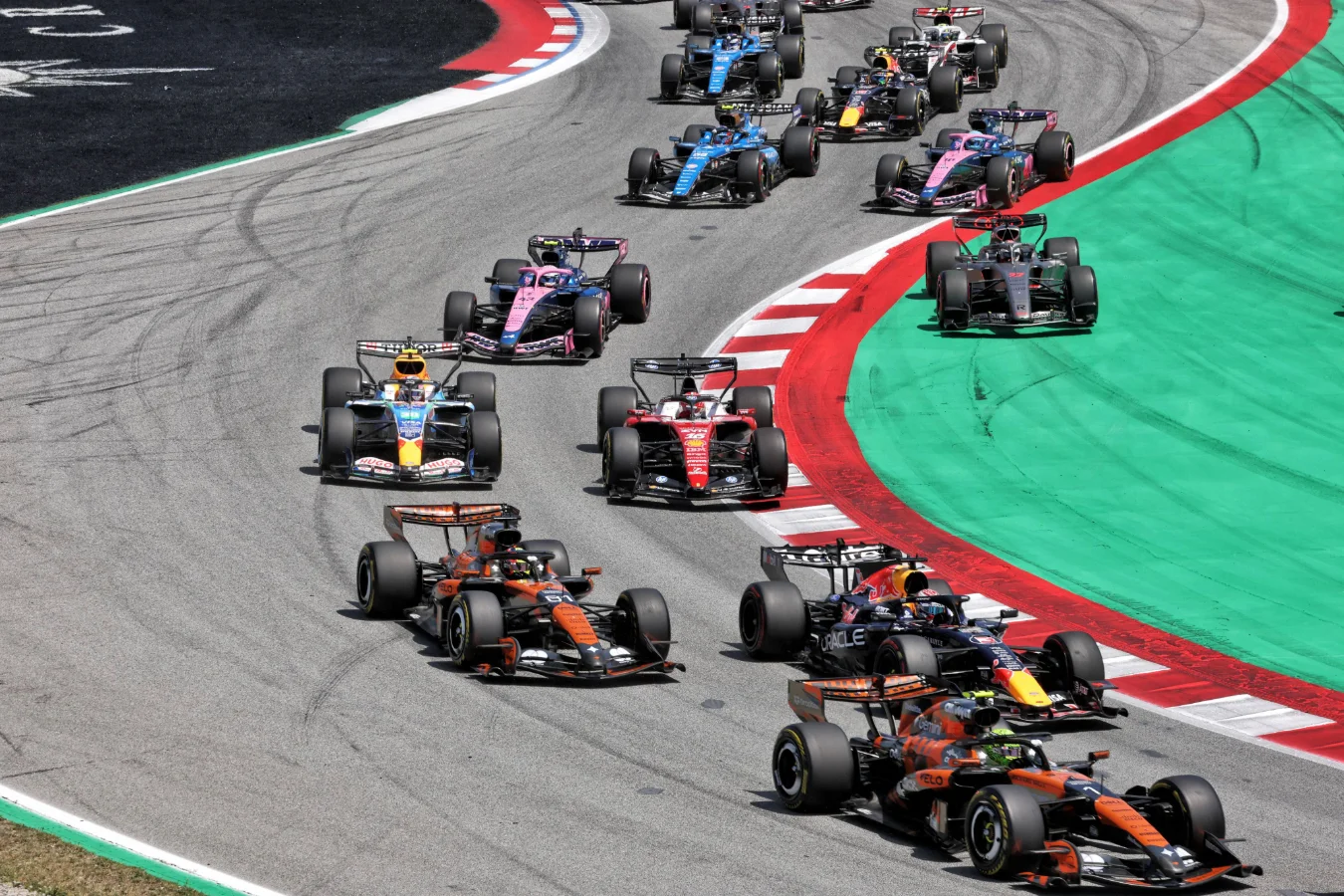
Grands Prix are a sequence of races that make up the championship. Every Grand Prix is staged at a different circuit, with races taking place in several nations.
F1 cars are specially constructed vehicles made to be incredibly quick while adhering to tight technical specifications.
How Does an F1 Weekend Work?
A typical F1 weekend includes several important sessions:
1. Practice
Practice sessions give drivers and teams the opportunity to learn the circuit, test car setups and evaluate tyre performance.
2. Qualifying
Qualifying determines the starting order for the main race.
Drivers compete for their fastest lap, with the fastest driver normally starting from pole position.
Qualifying is divided into three sessions:
Q1 – All drivers participate.
Q2 – The fastest drivers continue.
Q3 – The remaining drivers fight for the top positions.
3. The Race
The main event is the Grand Prix.
The goal of the competition is to finish the race distance faster than the other drivers over a set number of laps.
How Are Championship Points Awarded?
Drivers and teams earn points based on their finishing positions.
The driver who accumulates the most points over the season becomes the World Drivers' Champion.
The team with the most combined points from its two drivers wins the Constructors' Championship.
This means F1 has two major championships running at the same time:
Drivers' Championship: Which driver is the best?
Constructors' Championship: Which team built and operated the most successful car?
Drivers and Teams
Typically, two drivers compete for each F1 team.
Although the driver is in charge of racing the vehicle, the engineers, mechanics, strategists, and other team members play a major role in the team's success.
For this reason, the driver-team interaction is crucial.
Without a competitive and dependable vehicle, a fast driver cannot regularly win.
Comprehending Formula One Tires
One of the most crucial strategic components in Formula One is the tyre.
The primary substances for dry weather are:
Soft: Usually the fastest, but it wears out faster.
Medium: A balance between durability and speed.
Hard: Lasts longer but is typically slower.
Additionally, there are tires made for wet situations, such as complete wets and intermediates.
Tire deterioration, weather, traffic, and race position are some of the variables that teams must consider when changing their tires.
F1 Strategy
Driving as fast as you can is only one aspect of Formula One.
Teams make strategic choices all the time.
For instance, a group may choose to:
Replace tires as soon as possible.
Spend more time outside.
Change the tyre compound.
Respond to the rain.
Utilise a Safety Car.
Keep your tires safe.
Undercut a competitor.
An Undercut
When a driver pits ahead of a competitor, obtains new tires, and uses their greater speed to gain track position after the competitor eventually pits, this is known as an undercut.
A race's outcome can be entirely altered by strategy.
A Safety Car
The FIA may use a Safety Car in the event of an accident or hazardous circumstance on the course.
Drivers are required to follow the Safety Car and slow down.
This can shorten the distance between rivals and allow teams to swap out tires more quickly.
A Virtual Safety Car (VSC) can also be used, requiring drivers to slow down without an actual Safety Car leading the field.
What Is DRS?
DRS, or Drag Reduction System, was a system used to help drivers reduce aerodynamic drag and make overtaking easier.
When activated in designated zones under the applicable regulations, it opened part of the rear wing, allowing the car to reach higher speeds on straights.
F1's technical regulations are evolving, so beginners should check the current-season rules when learning about overtaking systems.
What Is a Formation Lap?
Before the race officially starts, drivers complete a formation lap.
They use this lap to warm up their tyres and brakes and prepare for the start.
After returning to the grid, the cars line up in their starting positions.
Then the lights go out—and the race begins.
Why Are F1 Cars So Fast?
F1 cars combine several technologies to achieve extraordinary performance.
Important areas include:
Aerodynamics
Hybrid power units
Lightweight construction
Advanced suspension
High-performance tyres
Sophisticated electronics
Energy recovery systems
One of the most important features is aerodynamic downforce, which helps push the car towards the track and allows drivers to carry enormous speed through corners.
What Makes a Great F1 Driver?
Speed is only one part of being successful in F1.
A great driver needs:
Consistency – Finishing strongly throughout the season.
Racecraft – Knowing how and when to overtake.
Tyre management – Maintaining performance over long stints.
Qualifying speed – Starting near the front can be crucial.
Mental strength – Handling pressure and mistakes.
Technical feedback – Helping engineers improve the car.
Why Does Weather Matter?
Weather can completely transform an F1 race.
Rain can make the circuit extremely slippery and force teams to change tyres.
A race that looks predictable in dry conditions can suddenly become a strategic battle when rain arrives.
This is why F1 teams constantly monitor weather information during a Grand Prix.
What Are F1 Circuits Like?
F1 races take place on very different circuits.
Some are permanent racing tracks, while others use temporary street circuits.
A circuit may feature:
Long straights
High-speed corners
Slow hairpins
Chicanes
Elevation changes
Narrow sections
Heavy braking zones
Every circuit creates different challenges for the teams.
How Should a Beginner Watch F1?
Don't worry about understanding everything immediately.
Start by following:
Qualifying – See who is fast.
The starting grid – Learn where each driver begins.
The opening laps – Watch the first battles.
Pit stops – Pay attention to tyre strategy.
Safety Cars – Watch how the race changes.
The final laps – Look for late battles and strategy decisions.
Over time, you'll naturally begin to understand the technical and strategic side of the sport.
Essential F1 Terms to Know
Pole Position: First place on the starting grid.
Pit Stop: When a car enters the pit lane, usually to change tyres or make repairs.
Pit Lane: The area where teams service their cars.
Podium: The top three finishing positions.
DNF: Did Not Finish.
DNQ: Did Not Qualify.
Grid: The starting positions for the race.
Paddock: The area where teams, drivers and F1 personnel operate.
Stint: The period a driver spends on a particular set of tyres.
Apex: The inside point of a corner that a driver aims to hit.
Downforce: Aerodynamic force that pushes the car towards the track.
Formula 1 may look complicated when you first start watching, but you don't need to understand every rule immediately.
Start with the basics: drivers, teams, qualifying, the race, points, tyres and strategy.
Once those concepts become familiar, you'll start noticing the details that make F1 fascinating.
Whether you're watching for the speed, technology, rivalries, strategy or simply the excitement of racing, Formula 1 has something for everyone.
Welcome to F1. Lights out, and enjoy the race!